
The Original
An interview with an up and coming Film Producer: Carlos Saldivia

Introduction
Hi there everyone! Welcome to The Undiscovered. If you’re new here, thanks for stopping by.
On The Undiscovered I find unpublished authors with drafted manuscripts—and a boat-load of passion—to interview right here on Substack. In these discussions, I ask detailed questions in the style of a post-publication interview to give authors a place to showcase their work, channel their excitement, and connect to potential fans and publishing professionals!
If you’d like to read an in-depth note regarding the purpose and mission of this newsletter, you can read about it in the About page of this website: About The Undiscovered.
If you think you might like to be interviewed, you can find more information in the Interview Criteria tab on the home page.
A New Kind of Interview
Today’s interview is going to be a little different folks.
I’ve had the pleasure of being put in contact with Carlos Saldivia, an artist and creator with a ton of experience in the writing world, who’s producing a film called The Original about Little League Baseball (which has it’s world series in Williamsport, PA, my hometown!)
While Carlos is not the main writer of the script, he has had a long and successful career in political film writing, and he’s also had a huge role in the creation and development of this project.
I’ve decided to break this interview up into two sections for your reading pleasure!
1.) Information about his career and who he is as a creator.
2.) Information about his new movie “The Original” and his creative process.
I think Carlos has a lot of really interesting and informative things to tell us about writing and the creative process, so I hope you’ll enjoy reading!
Carlos Saldivia
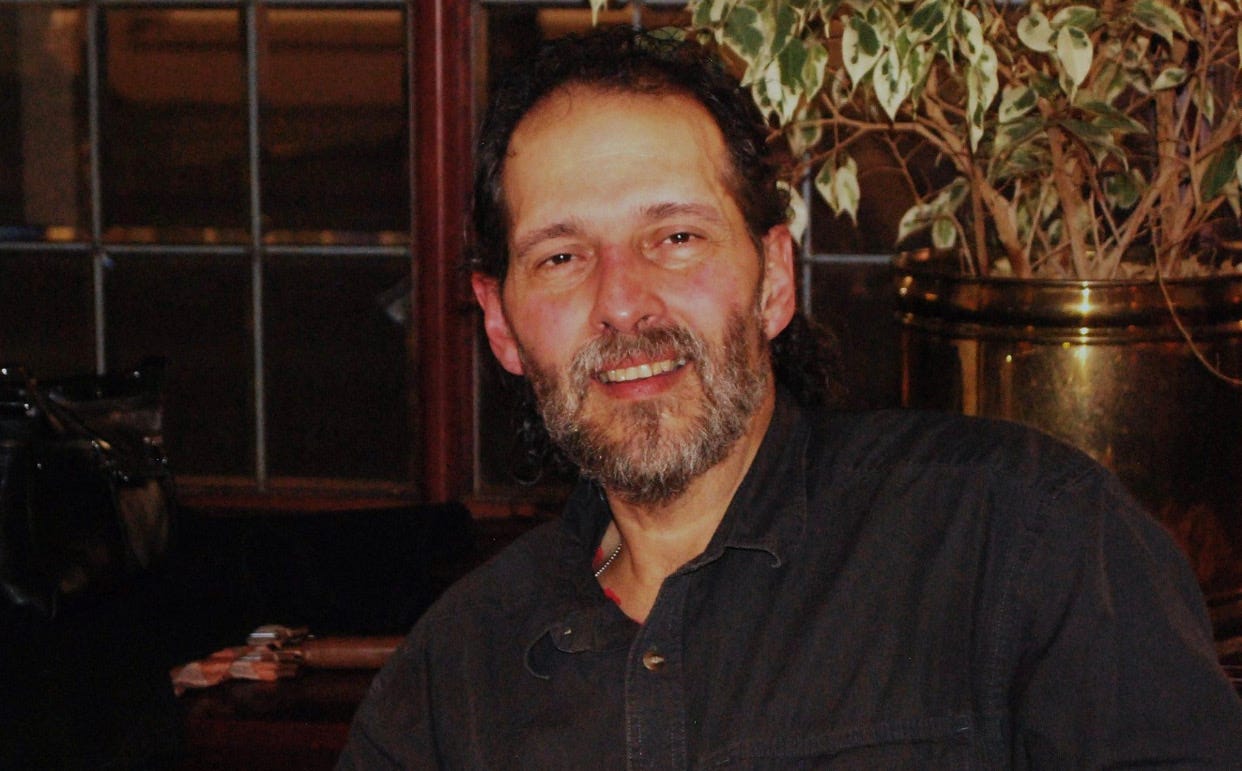
On May 31, 1990, Carlos Saldivia and his two friends Cary Solomon and Chuck Konzelman (creators of “God’s Not Dead,” “Unplanned” and “Nefarious”) divested their entire lives and moved to Hollywood to makes moves, based on a dream.
Since then he’s worked as a story editor in charge of the Literary Department of the Jack Scagnetti Talent & Literary Agency (a guild signatory firm), in Los Angeles, then honed his production skills in the New York Production scene, and forged a lucrative career as a Political Media Advisor on campaigns at every strata at the Local, State and Federal level, save for the Presidency, while still producing projects including shorts, independent film and commercials.
Retired from politics 3 years ago, Carlos has focused on development of “The Original,” the true life underdog baseball story of Carl Stotz and his founding of Little League, a hockey feature film project about the famous Dawson City Nuggets that challenged for the 1905 Stanley Cup, a biographical film about Charlemagne with writer Michelle Wheeler, a Charlemagne descendant, and a feature film recounting the story and commission of the King James Version of the Holy Bible..
Carlos resides in Williamsport, PA, with his wife Melinda Saldivia nee Hevner, the love of his life, and their four babies (dogs).
Movie (Project) Synopsis
The Original tells the remarkable true story of Carl Stotz, a dreamer from a small-town of Williamsport, Pennsylvania, whose vision to create Little League Baseball forever changed, and continues to impact the lives of millions of kids around the world.
We follow Carl (perhaps providently played by Pennsylvania’s own Miles Teller) as an ordinary man with extraordinary tenacity and will, who made a simple promise: to build a baseball league for his nephews and other neighborhood kids to play just like the pros.
But in a town gripped by the challenges of the Great Depression, Carl’s dream faces overwhelming obstacles. With no money, no influence, and no connections, he finds himself battling local skepticism, personal sacrifices, and the unrelenting pushback from elites and some community officials that don’t believe in his vision.
In this inspiring story of grit, determination, and heart, Carl refuses to back down, fighting at all cost to keep the soul of his vision intact. Against all odds, he proves that one person’s passion can overcome the impossible.
Along the way, he redefines the meaning of sportsmanship and competition, building not just a league but a lasting legacy.
What starts as a humble backyard idea grows into a global phenomenon, because a baseball player was what every kid wants to be, and every old man wishes he had been.
Eighty five years later Carl’s promise continues to beat in the heart of every kid who walks into a Little League diamond and smiles in the summer sun.
They might not know his name but they share his passion and enjoy the fruits of his determination.
The Bull-headed Dutchman as Carl was named, has cracked the code and made their summers longer in the shadow and benediction of baseball.
Carl remade something in Pennsylvania that last year, before the war that changed the world: He remade America.
Today, Little League Baseball includes over 7,000 leagues worldwide, with 90 million kids having played the game across 20 regions (10 in the U.S. & 10 International that compete in the LLWS).
The Little League World Series, now in its 85th year, stands as a tribute to one man’s relentless fight for something bigger than himself—a story of the invincible nature of the American spirit and triumph that continues to inspire generations.
This is the nostalgic story of how Carl Stotz founded Little League.
The Interview
Evelyn: I’m glad you’re here! Thank you for joining me! I’m excited to talk about a bunch of things. I’ve decided to break up the interview into two different sections. The first section is about you and your career as a writer and what that was like for you, and then the second part will be about The Original. Does that sound okay?
Carlos: Whatever you want to do, I’m open.
Carlos’s Career
Evelyn: All right, awesome! So my first question is: can you talk about your career as a political film writer and what that was like? Can you even define that? Because I’m not really sure I know.
Carlos: Sure. Originally, in 1990, my friends and I went out to Hollywood. We divested all our lives. At the time, my friends were executives at an insurance company, and I owned a limousine company in North Jersey.
I loved doing that work. I’m a people person, so I had a thriving business, but the itch to make movies was amazing.
What changed my life was the movie Glory. It opened in February of 1990, and we went to see it on a Friday in Rockaway, New Jersey. We went back the next day on Saturday and brought a couple more people. Then we went back on Sunday and saw it a third time, and by that time we had like 17 people with us.
I remember we went to a diner afterwards, and there was this whole long table of people. That’s when my friends and I looked at each other and basically said, “It’s now or never.”
So Monday morning, we were on the phone with USC. They sent a prospectus, and when we looked at it, the thing for us was that they offered a top-level certificate program if you went for four full summers.
We called them up, pretty excited, and asked, “Do you think you could take all four years, consolidate them into one summer, and we promise we’ll finish the curriculum?” They laughed at us and said no.
So, being businessmen from New Jersey, we took four guys times four summers, wrote them a check, and sent it to them.
Evelyn: Wow.
Carlos: Needless to say, they called us back and we left on May 31st, 1990 in a Jeep Laredo, pulling a small U-Haul container with all our things. We moved into an efficiency motel on Ventura Boulevard in Studio City. That’s what we did. We got the certificate and started our careers.
Five years later, I returned to New Jersey because I needed back surgery—I played hockey for 25 years of my life, including high school and college—when I recovered, I started working in the New York production scene.
In Los Angeles, I worked in the literary department at a talent agency, but when I got back to Jersey, I worked in production. Producing is my first love.
Around that time, a photographer asked me to take photos at political events. That rolled into designing ads, writing scripts, and shooting. I became a five-tool guy in the business: I could write, direct, produce, operate a camera, and edit. Five-tool guys were in demand: They can do it all so you don’t have to pay five people.
Sometime after 9/11, I had gotten married, and my wife and I had a house full of equity in New Jersey. She grew up in Williamsport, PA and there was an opportunity to buy a beautiful home there, so we moved.
Now, Williamsport is not a media mecca.
Evelyn: [laughs] No.
Carlos: But the fact that I had the tool set to do political media helped me in Pennsylvania because there are politicians everywhere, and they all want to get elected. Because they want to get elected, they pay! That kept food on the table for a long time, and it was a very lucrative side gig. I still did commercials, short films, and independent films too.
As a political media advisor, I would advise politicians of both parties on how to present themselves and how to be on camera. I also had a very lucrative gig shooting photography, which is extremely important in politics.
In one particular race for Mayor of Williamsport, some of the photography I did made the difference in him getting elected.
Word caught on, people talked, I got referred, and it was a flurry for about 20 years. But that’s behind me now.
Besides photography and video, there were two main things I did. Number one, I pioneered social media for politicians in Pennsylvania—I had the first politician ever to have a social media account there.
Evelyn: Oh, wow.
Carlos: And number two, I could write copy. That was extremely fun because you get to affect the culture. As a writer, it’s a cool thing to hear someone else say your words.
It was very fulfilling and a lot of fun. I met a lot of great people on both sides, but my love is with film and narrative projects. That was the lion’s share of what I did as a political media advisor.
Evelyn: Okay, so I have two questions. You talked about how, as a consultant, you spent time teaching people how to best present themselves on camera or through writing. Right now for authors, something that’s becoming so important is presenting yourself through social media and having a platform so people can follow your work. I’m curious if you have any tips for writers who are new to that?
Carlos: With respect to photography for writers, you need a photographer who specializes in candid photography.
Evelyn: Okay, like for events and things, you mean?
Carlos: For events and things, yeah. You can sit for a traditional photo session, but most of the best photos you will ever see are candid. That’s just the way it is.
And you can’t go cheap. You want an investment media-wise that matches the investment you made writing a book, which is a lot. So why go cheap? Find the absolute best candid photographer you can. You do that by talking to photographers, and they’ll refer you. Candid photography is a specific skill.
You hire them for the day and have them follow you.
Have them photograph you at home, at work, at your favorite restaurant, or at your favorite coffee shop. You never know when that millisecond image will be captured.
If you’re really serious and can afford it, pay them for the weekend! Make it a weekend where you go to different places to get photographed. For beginners, that’s a really good direction.
Be yourself and don’t be nervous. If they’re shooting you the entire day, it’s very rare that you’ll stay nervous the whole time. So just be yourself and have fun. Fun sells.
My one fast and hard rule: don’t get your picture taken with sunglasses on.
What are people thinking? Even Hollywood stars wearing sunglasses in photos look dumb. We’re not looking for your sunglasses; we’re looking to see the inner depths of your soul, and you can only do that through your eyes.
It always bothers me when I see photos of people wearing sunglasses, or a group photo where everyone has them on. What are they thinking?
Evelyn: My next question is: can you talk a bit about what political copywriting is like? Some people would probably be interested in knowing what that kind of career work does.
Carlos: What really got traction in my career doing political media was crafting postcards.
On the front of the postcard would be the absolute best image I could find, along with a two-to-three-word slogan. On the back, there would be biographical information about the politician printed in grayscale.
Nobody was doing that. I invented it! You’ve probably never seen one, I bet.
Evelyn: No, I haven’t.
Carlos: It’s a tall postcard with a fantastic photograph and a short slogan on the front. On the back, it has biographical details printed over another photo—usually a nice landscape or location shot—in grayscale.
It won elections. Flat out won elections, especially in rural areas like Williamsport, where we have about 28,000 people.
To give you an example: in one particular race, we had a fabulous photo of the candidate looking off-camera and slightly upward. The caption simply said: “Looking Ahead.”
Evelyn: Perfect.
Carlos: It was perfect. On the back, it had a picture of his family, a short blurb about his campaign, and you just couldn’t take your eyes off it.
The reason you want great candid photography is so people can’t take their eyes off it.
I’ll give you an example from movies. Have you seen Michael yet, about Michael Jackson? Or Young Washington? The unique aspect of those two films is that you cannot take your eyes off the lead actors. When you have good photography, it works the same way—you can’t take your eyes off the postcard, magazine cover, or photo. It takes a little work and investment, but when you capture it, there’s nothing like it.
Evelyn: That’s really great to know, especially because a lot of authors are expected to run their own book marketing now.
Carlos: You’ll know the right photo when you see it—it’ll jump right out at you. You don’t have to be an expert, but you do have to spend a little time, a little money, and hope for the best.
A Discussion of The Original
Evelyn: Right. Well, now I want to move into a discussion about The Original, because I’m really excited about that project. Could you give us a short summary of the story itself? What exactly will you be capturing in the movie?
Carlos: By and large, we’re telling the true story of how Carl created Little League, with a little creative license in adding a few characters.
We delve into how Carl developed key elements of the game. For example, in Major League Baseball, the distance between bases is 90 feet. We dramatize how Carl experimented with geometry to figure out how to scale a full-sized field down for kids.
Evelyn: That’s really interesting.
Carlos: Finding the distance between the pitcher’s mound and home plate was pure geometry. He also had to figure out how to size down the heavy bats for young kids, and how to adapt base-stealing rules for Little League.
The story also follows the real-life trajectory of what happened in 1938. In the middle of the Great Depression, a regular guy in a rural city like Williamsport set out to do something with no experience and no tools. On top of that, parts of the community were against him because during the Depression, small-town dynamics meant some people didn’t want to see others succeed.
We dramatize how Carl pitched 57 people before someone finally said yes.
Evelyn: Wow.
Carlos: In Hollywood and literature, you really need thick skin to send out letters and receive so many ‘no’s. The worst part isn’t even a plain ‘no’—it’s when they say your writing isn’t good enough
Evelyn: Or that it was close.
Carlos: Right. They might know writing, but they don’t know culture or people, but you can’t say those things.
I have a hard-and-fast rule that I learned from Harvey Keitel: your job is to give direction to people who are less experienced than you. End of story. We’re all in this together, and we’re here to see each other through. The very best people in our business help others.
Can you imagine pitching 57 people in 1938 and getting turned down? What if he had stopped at 30?
Evelyn: Why do you think they said no?
Carlos: Money was most of it, but status was another factor. People thought, “Who are you to do this?”
That happens all the time. It’s not about race; it’s about class structure—people believing they are above or below someone else. Carl was just a regular guy, so people questioned him.
In the film, we explore self-reliance, hard work, sportsmanship, and true competition.
Evelyn: That’s a great theme.
Carlos: People might say, “We’ve seen those themes in every movie.” But when was the last time you saw a movie about a single person who changed the entire direction of childhood globally?
Up until 1938, family life revolved around the father going to work. After 1946, post-war leisure time expanded, and Little League exploded. Carl shifted the family dynamic from being centered on the father to being centered on the kids. That’s how we eventually got “soccer moms”!
Evelyn: [laughs] Yeah!
Carlos: It all started with one simple idea: Carl creating organized baseball for his nephews so they could have fun playing with friends.
Today, Little League spans 80 countries with 3.5 million kids playing every year. Conservatively, between 75 and 90 million people in the U.S. alone have played Little League.
This isn’t just a regular baseball movie—it’s an important cultural event showing how Carl built this movement and changed families forever. Two years ago, Steve Keener, the CEO of Little League Baseball, gave a speech and credited one million annual volunteers for keeping it alive.
Evelyn: Wow.
Carlos: I feel truly blessed to lead this project. It’s the greatest thing I’ll ever do, and I’ve never been more excited.
Evelyn: What has The Original taught you about the art of storytelling?
Carlos: Great question. First, while researching the film, I realized I couldn’t use most of what actually happened because people wouldn’t believe it! You know how people say, “You couldn’t write this if you tried”? What Carl accomplished was beyond imagination for a regular person.
It makes me ask myself, “Why can’t I do extraordinary things too?” It comes down to trying, self-reliance, maintaining a great attitude, and never giving up.
Also, when I moved to Hollywood at 30 years old, it taught me one crucial thing: collaboration is king. Asking people for help is a thermonuclear weapon for good.
Evelyn: I completely agree.
Carlos: Have you spent much time in Williamsport yourself?
Evelyn: I grew up there, actually, so this story is close to home both figuratively and literally!
[Could you talk about where the project originated? What was its genesis?]
Carlos: So, I was working on a film in Williamsport and In the mid-1850s, Williamsport was the lumber capital of the world, so it has an extensive historic district lined with lumber baron mansions for almost two miles.
One of those homes is a house museum in pristine condition from 1885. The people running the museum hired me to make a film for a new media room where tour groups could watch the history of the house. I shot the entire film in period style to match 1885.
The movie is called The Williamsport Rowleys, and you can watch it on YouTube [it’s fifteen minutes long for those of you that are interested].
We had a red-carpet premiere in Williamsport, and one of the guests was Karen Stotz Myers, the youngest daughter of Carl Stotz, who founded Little League Baseball and she hired me to digitize all the memorabilia her father had accumulated throughout his life. At the end of the project, she gifted me his autobiography, A Promise Kept.
I read the book, and it blew me away. I sent it to my partner in Los Angeles, who read it immediately and said, “Let’s make a movie.”
From there, I hired a screenwriter, and we wrote a script. Most recently, we hired a director named John Rusk. John worked with M. Night Shyamalan as the first assistant director on 14 of his films over a 30-year career.
He’s one of the few people in Hollywood who uses both sides of his brain: he was a first assistant director for Shyamalan and a line producer for other projects, handling both the creative and logistical sides of filmmaking.
Evelyn: Oh, wow.
Carlos: Plus, he’s a fanatical baseball fan. I invited him to Williamsport for a championship weekend, showed him the sites, and had him read the script. He said it was one of the most beautifully written scripts he’s read in his 30-year career.
Evelyn: Wow, that’s amazing.
Carlos: When I asked him who the most important person I should talk to about directing was, he looked at me after the weekend and said, “Me.”
That started a two-month journey of vetting him as a director. I came to realize that I wasn’t going to find a Hollywood director who loved baseball more than John.
The Original is the true story of Carl Stotz and his founding of Little League. If it’s going to get done right, it needs to be made by baseball people and the reason is simple: passionate baseball people will do anything for baseball. Filmmakers will do anything for film, and novel writers will do anything for literature.
We are very lucky. John signed on October 20th of last year, and just last week, he and the screenwriter handed in their latest draft. We’ve never been more excited.
Evelyn: Yay! That’s so exciting.
Carlos: Here is the insane thing about this whole story, Evelyn: I love sports and want to make true-life movies about sports figures. I knew who Carl Stotz was, yet this story was sitting right in front of my nose for the ten years I had already lived in Williamsport before Karen gave me that book.
Sometimes you have to calm your mind to assess what’s around you, but as a storyteller, you always have to keep looking. Praise God that I got the opportunity, even though I was blind to it for a decade.
If you ask most baseball fans today who Carl Stotz was, they wouldn’t know. What I love about this story is that as great as Little League is, imagine the positive impact it will have when people learn its origin story.
Evelyn: Absolutely.
Carlos: We have a script, we have a director, and next Thursday we’re presenting it to a major actor’s agent.
Evelyn: Exciting!
Carlos: I don’t want to say the name yet to avoid putting pressure on them, but it’s a very exciting time for the project.
Conclusion
I’m so grateful that I’m getting to branch out and talk to people with hands in all different kinds of processes related to storytelling. If you’re interested in Carlos and his project The Original, you can find updates on LinkedIn, X, and The Original Film Website. Carlos has also informed me that you can subscribe and receive updates about the film’s progress straight to your email!
Thanks for venturing into the undiscovered with me! Until next week!
The background on the story and how we get to a place in our life is inspiring. Great interview.